

AGM vs Lithium for 4WD Touring — How I Actually Decide
Comparison Guide: AGM vs lithium battery
·
Dual Battery & 12V – Bendigo & Central Victoria ·
Read time: 7 min
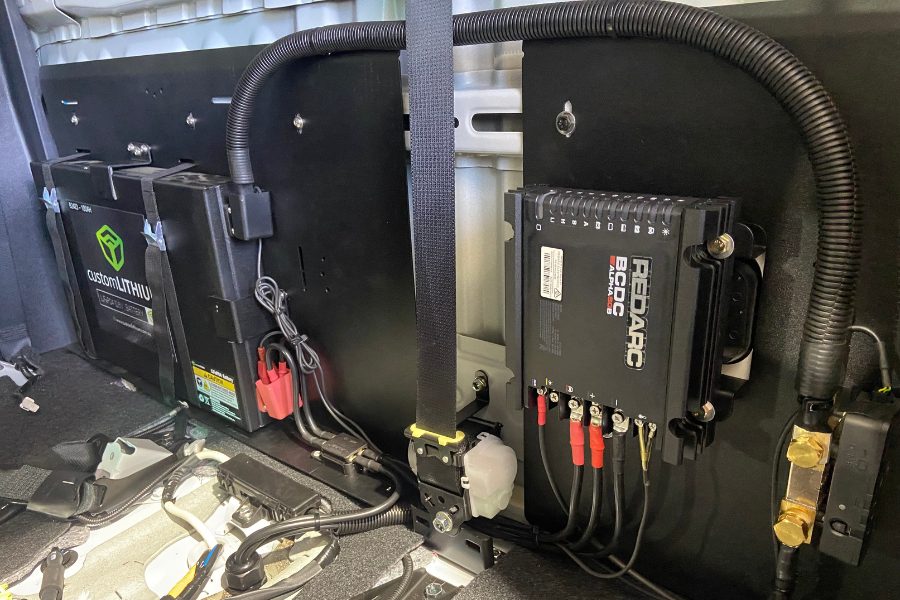
The AGM vs lithium battery question comes up more than almost any other when blokes ring me about a touring setup. Most of the time they’ve already gone down a rabbit hole of forum threads and reviews. And they’ve often rung me more confused than when they started.
So I’ll give you the honest version — the way I’d explain it in the workshop. Not a chemistry lecture. Just how I weigh up the AGM vs lithium battery choice when a customer wants the back of their 4WD set up for touring.
The Honest Answer Up Front
First, here’s the short version. Most weekend and family touring rigs are perfectly happy on a quality AGM, and you’ll save a heap. However, serious long-haul, off-grid or weight-sensitive builds are usually better on lithium.
But the chemistry is the last thing I land on, not the first. In fact, I can’t make the AGM vs lithium battery call until I know three things. What you run off it, how you charge it, and where it lives in the truck.
So get those three right, and the battery almost picks itself.
What I Need To Know Before I Can Answer
So when someone wants the best dual battery system for their touring vehicle, I work through a few questions first. They matter far more than the AGM vs lithium battery badge on the box.
What I check before recommending AGM or lithium
- What are you running off it? A fridge or freezer, tools on charge, lighting, devices, an air compressor — or all of it. A fridge and some lights is a very different draw to an induction cooktop and a coffee machine.
- What’s the budget? There’s no point speccing top-shelf lithium if the money is better spent elsewhere first. So I’d rather stage it sensibly than blow the lot in one spot.
- How are you charging it? A standard isolator, a DC-DC charger, solar on the roof, or topping up from the caravan generator. The charging plan matters as much as the battery.
- How long between charges? This is the big one for anyone running solar, because overcast days drop your panel output right off. If you sit in one camp for a week, that changes everything.
- Where will it live? Engine bays run hot, which is harder on a battery. Under a seat, in an undertray, in a drawer system, or in a custom cradle all have trade-offs — and they all affect what physically fits.
- Is there an existing system? Sometimes I can integrate an upgrade. Other times the old setup was wired so badly that it’s cheaper to start fresh. Either way, I’ll tell you straight.
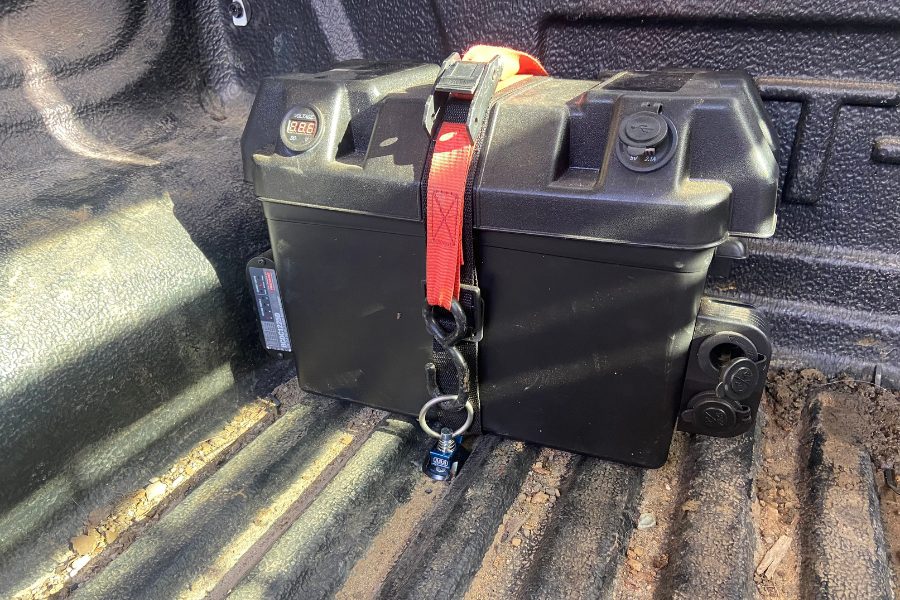
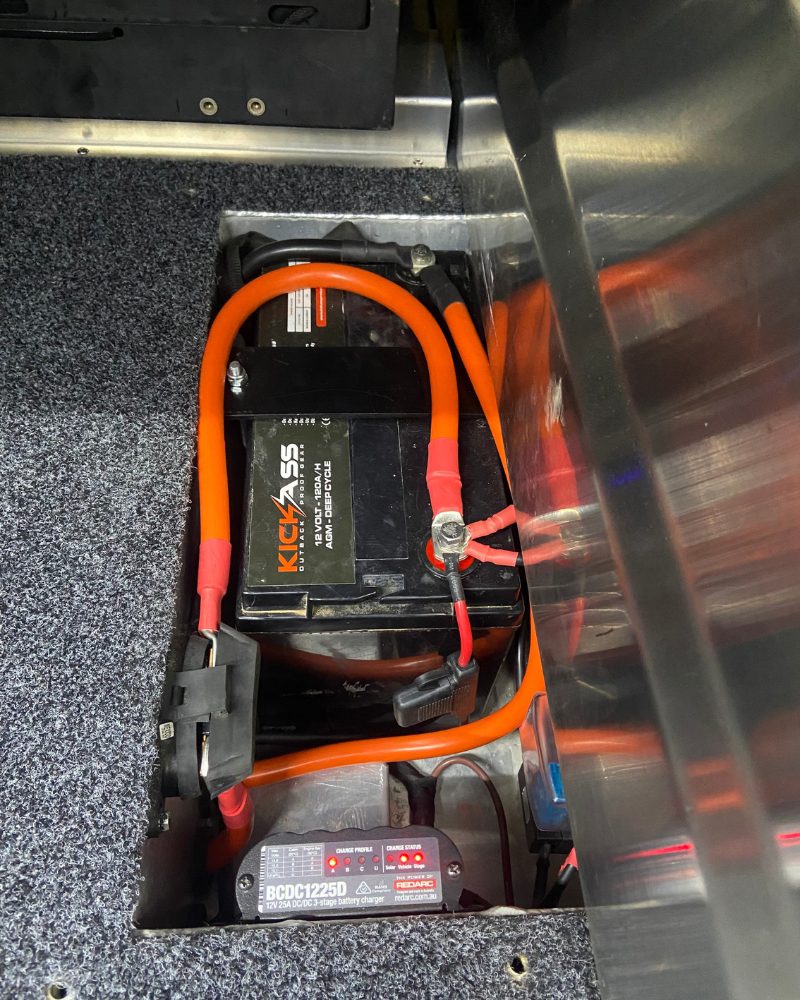
“Tell me what you run off the battery and how you’re charging it, and the AGM vs lithium battery answer sorts itself out. The chemistry is the easy part — the questions before it are what actually matter.”
— Mitch, MBC 4X4 Solutions
AGM Battery — What It Does Well and Where It Falls Down
Let’s start with AGM, the older half of the AGM vs lithium battery question. It has been the workhorse of dual battery setups for years. And for good reason.
It’s proven, it’s about a third of the price of lithium, and the charging is simpler. In many factory-style setups it’s close to a drop-in. So for plenty of customers, it’s still the sensible call.
However, where it falls down is weight and useable capacity. AGM doesn’t like being run flat. Pull it down too far, too often, and you’ll shorten its life fast. As a result, the last chunk of capacity isn’t much use to you.
For example, a Ranger doing weekend trips with a 60-litre fridge and some LED lighting will be happy on a decent AGM for years. There’s no need to spend up on lithium for that.
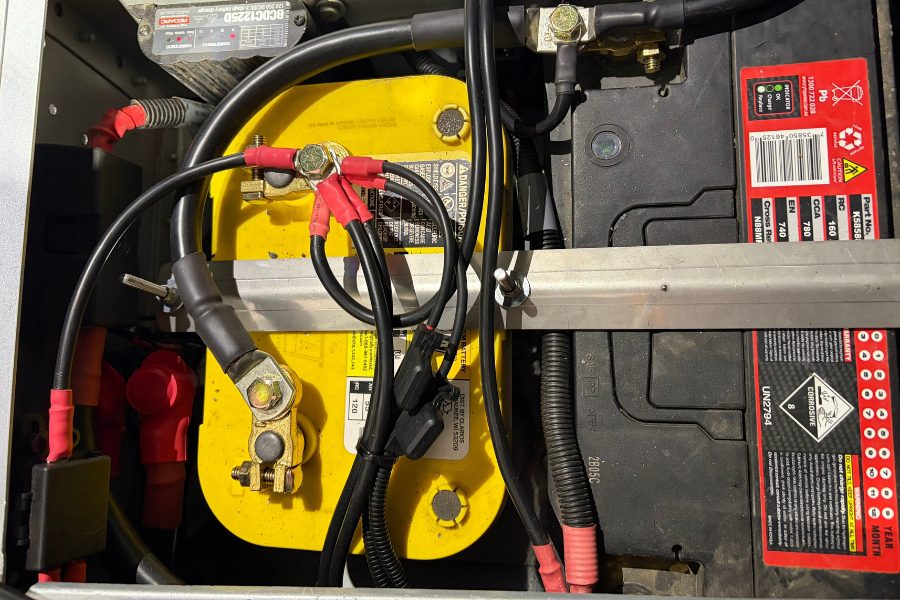
An Optima Yellow Top AGM mounted under the seat of a Land Rover Defender — running an air compressor, fridge, accessory sockets and lighting off a Red Arc BCDC1225D.
Lithium Battery — What It Does Well and What It Costs You
Lithium is the upgrade most people are really asking about. And where it’s the right call, it’s a genuinely better battery.
First, it’s often around 60% lighter for the same useable capacity. You can also run it much further down without hurting it. Plus it recharges faster, the cycle life is far longer, and the voltage stays flat almost to the end.
However, it costs more up front and takes a bit more care in the install. Lithium wants a proper DC-DC charger with a lithium profile. So you don’t run it straight off the alternator.
Some lithium iron phosphate (LiFePO4) chemistries also don’t like charging in the cold. As a result, a cheap upgrade on the wrong charger won’t give you what you paid for.
For example, a 200 Series or 79 Series doing remote two-week trips, running induction or coffee gear, is the textbook lithium application. That’s exactly where the weight saving and deep capacity pay for themselves.
AGM vs Lithium Battery — Side by Side
Here’s the AGM vs lithium battery comparison, metric by metric. Neither chemistry wins on everything — and that’s the whole point.
Factor
AGM
Lithium (LiFePO4)
Upfront cost
Lower — roughly a third of lithium for the same nominal capacity.
Higher — the premium option up front.
Weight
Heavy.
Light — often around 60% lighter for the same useable capacity.
Useable capacity
Limited — best kept to around 50% depth of discharge.
Deep — most of the rated capacity is genuinely useable.
Cycle life
Shorter, especially under heavy or repeated deep discharge.
Long — many times the cycles of AGM under the same use.
Charging
Simpler. Works with a standard isolator or DC-DC setup.
Needs a proper DC-DC charger — never straight off the alternator.
Cold-weather behaviour
| Tolerant of cold charging. |
Some chemistries won’t charge below freezing without protection.
Best use case
Weekend and family touring, simpler 12V loads, tighter budgets.
Long-haul and off-grid touring, heavy 12V loads, weight-sensitive builds.
Not Sure Which Side of That Table Your Rig Sits On?
Tell me what you tow, what you run, and where you camp — and I’ll point you the right way on the AGM vs lithium battery question without the sales spin.
How I Wire Either System — The Install Matters More Than The Chemistry
In fact, this is the part the forums skip. A properly designed AGM system will outlast a badly wired lithium one every time.
Plus, the battery is only as good as the install around it. And that’s where most cheap fitouts come undone.
Whichever way we go, I build to the same standard. That means a Red Arc DC-DC charger and monitoring, neat wiring, sensible fuse sizing, and the correct cable gauge. I lay the whole lot out so you can find a fault in five years without pulling the dash apart.
I’m brand-agnostic here. So the AGM vs lithium battery call comes down to your build, not my markup.
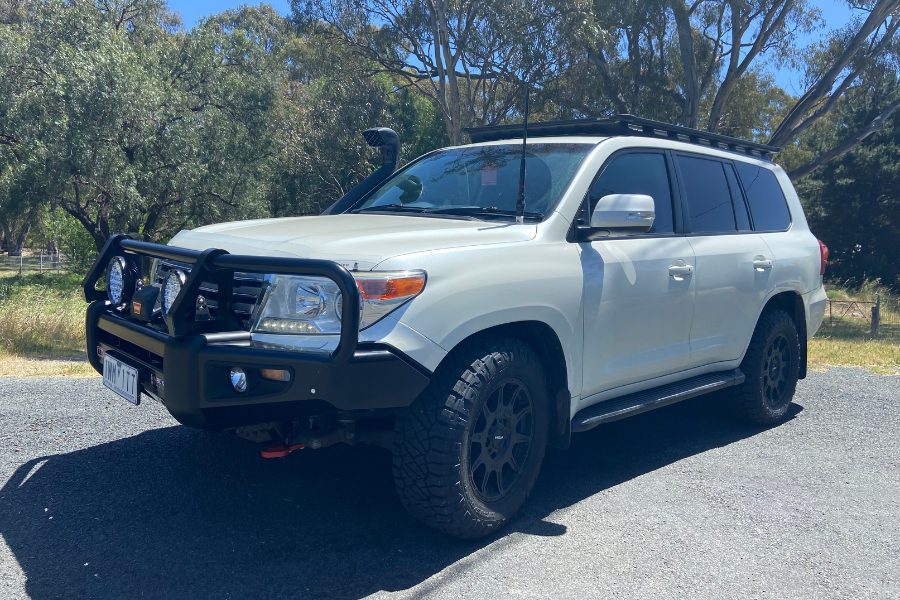
All of that lives under our 4WD accessories and fitouts work. And you can see real dual-battery installs on the Recent Builds page — including the under-bonnet dual battery on this 200 Series touring fitout.
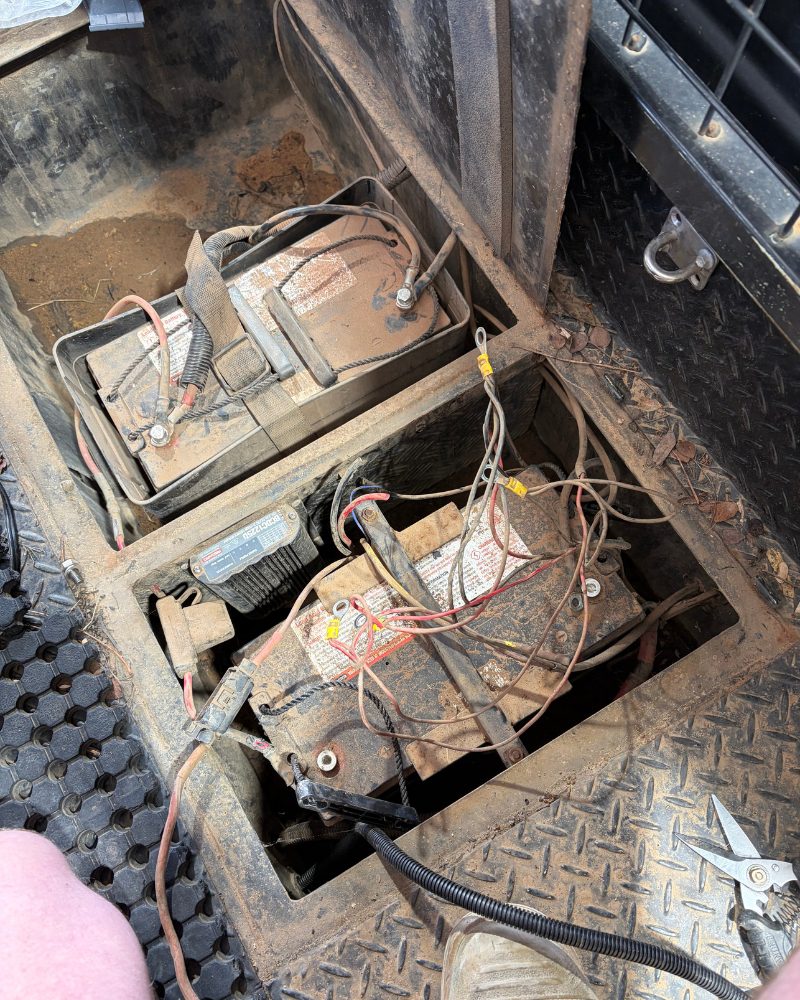
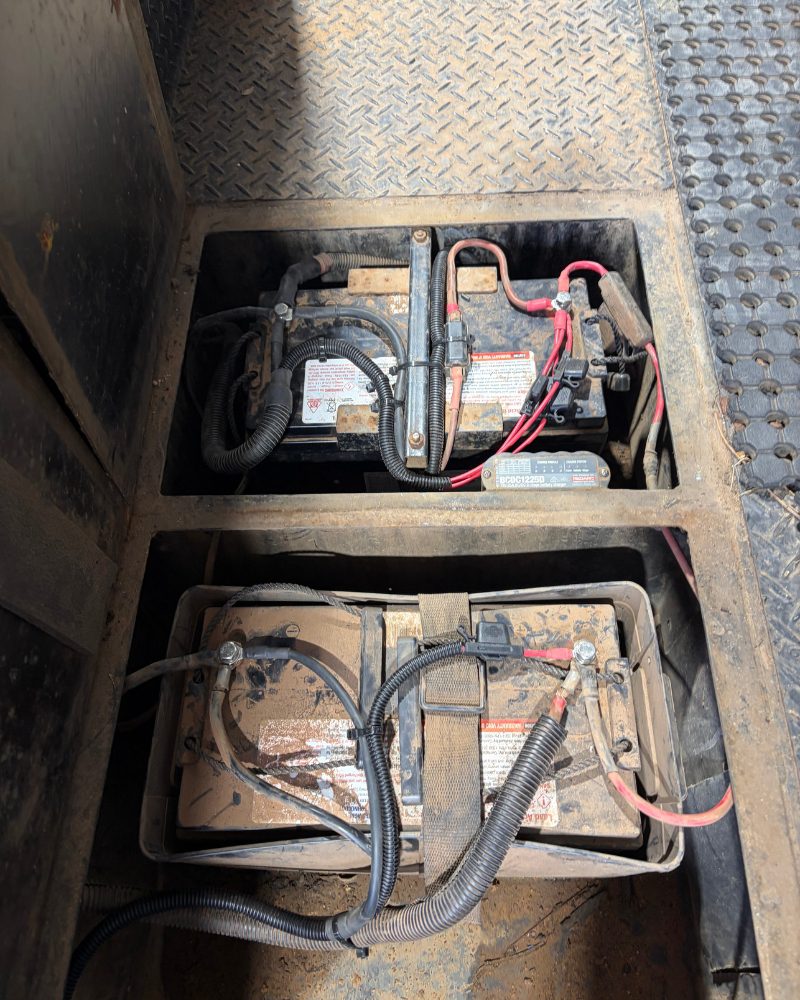
“Tell me what you run off the battery and how you’re charging it, and the AGM vs lithium battery answer sorts itself out. The chemistry is the easy part — the questions before it are what actually matter.”
– Mitch, MBC 4X4 Solutions
MBC 4×4 Solution
Where AGM Is The Clear Call, Regardless of Budget
There’s one job where AGM wins hands-down, and it’s nothing to do with touring power. On the high-performance winches I build as an Official Gigglepin Agent, AGM is a no-brainer. That’s especially true of the top-end 24V twin-motor setups, which run two 12-volt batteries wired in series to reach 24 volts.
That’s a winch-supply job, not a house-battery job. AGM’s ability to dump huge current on demand is exactly what it’s good at. So I keep the two systems separate in a build. There’s more on that over on the winches service page.
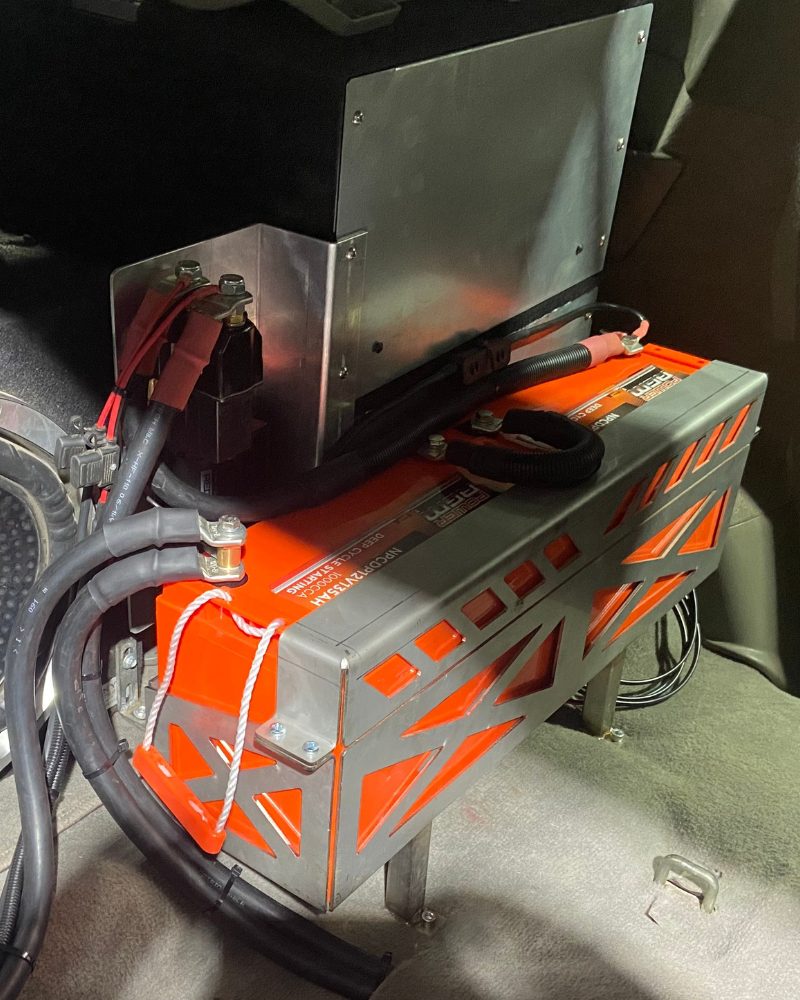
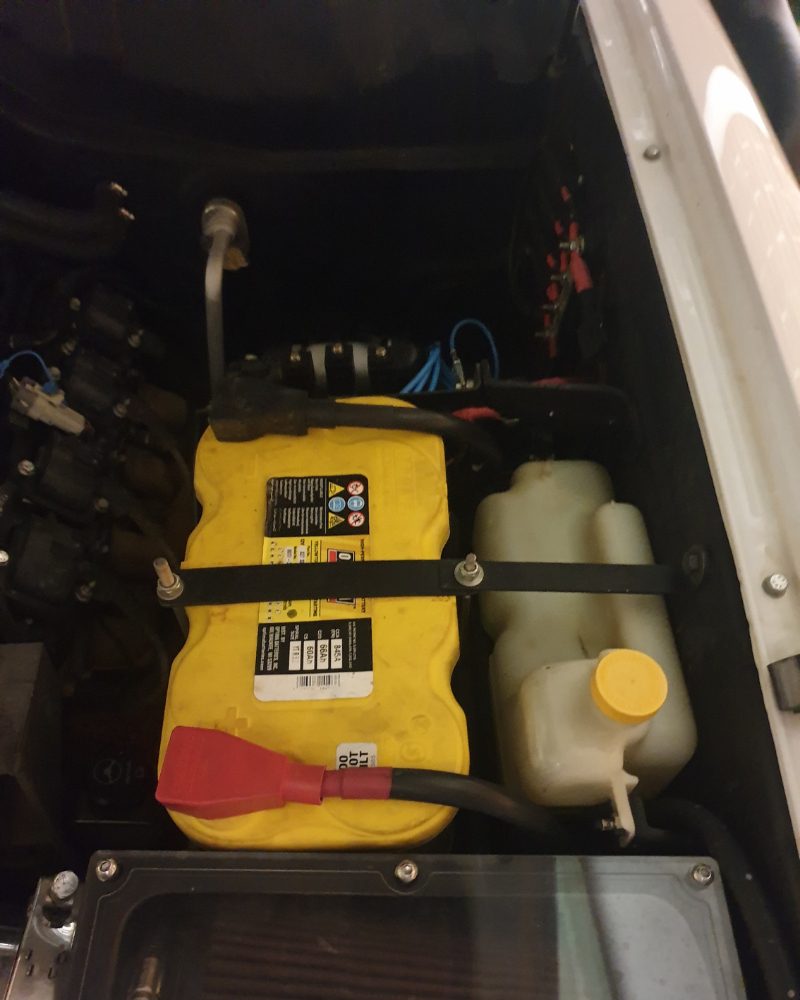
135Ah AGM
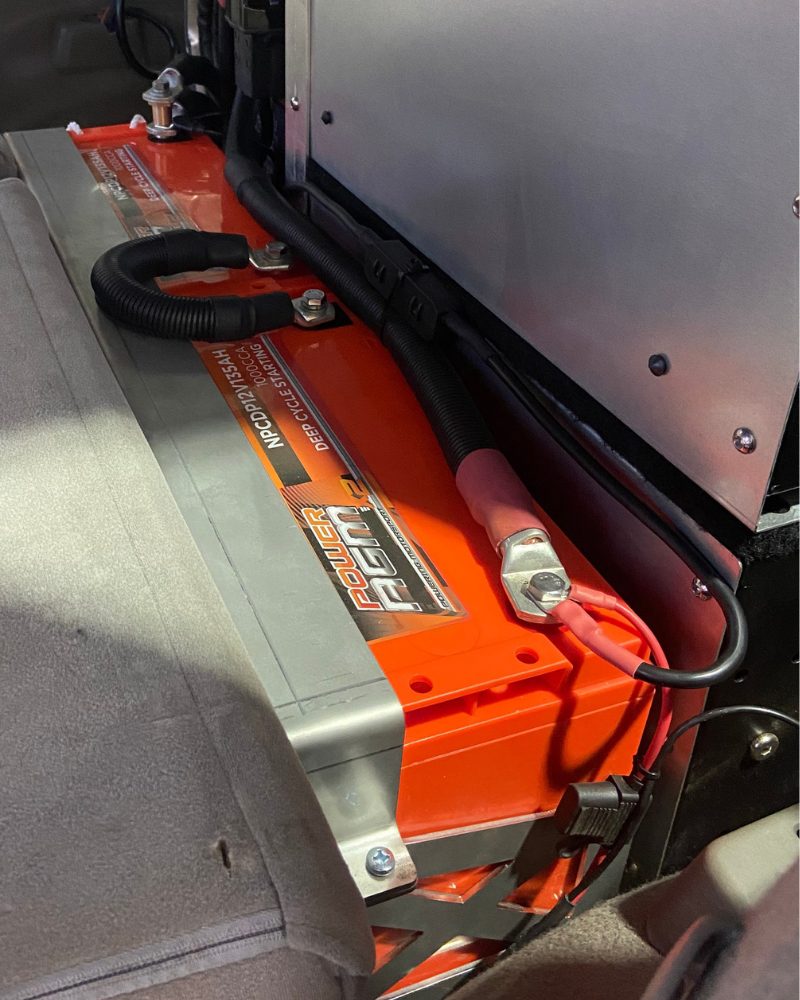
135Ah AGM
845CCA AGM
How Long Does a Lithium Battery Take to Charge While Driving?
Short answer: usually two to four hours of driving fully recharges a 100Ah lithium battery from around 50% down, through a 40-amp DC-DC charger. So lithium suits anyone moving camp every day or two.
The variables are your alternator output, the length of the drive, how far you’ve drawn the battery down, and the temperature. However, if you sit in one camp for days, solar does the heavy lifting instead of the alternator.
The battery is only one decision in a touring build, though. For example, if you’re loading up with water, drawers and gear, your springs need sorting at the same time. I’ve covered that in the constant-load vs progressive-rate suspension article (coming soon), because those two calls really go together.
AGM vs Lithium Battery — Common Touring Questions
Five real questions on dual batteries & 12V fitouts — straight answers, no fluff.
Can I Upgrade My AGM Dual Battery to Lithium Battery Later?
Usually yes, but it’s rarely a straight battery swap. Lithium wants a proper DC-DC charger with a lithium profile, and you’ll often want a battery monitor to see what you’ve got left. If your existing setup was wired well from the start, the upgrade is straightforward. If it was a budget job, it’s a good moment to fix the wiring too. Talk it through before you buy the battery.
Will a Lithium Battery Work With My Factory Alternator?
Yes, with a Red Arc DC-DC charger sitting between the alternator and the lithium battery. Don’t run lithium straight off the alternator. A lithium battery will try to pull more current than the alternator wants to give, and some modern variable-voltage alternators won’t charge it properly at all. So the DC-DC charger manages the current and gives the battery the charge profile it actually needs.
How Long Should a 4WD Touring Battery Last?
A good AGM under sensible use will give you four to six years. A quality lithium with a proper charging setup will usually go eight to twelve years. However, both numbers assume the battery is charged and discharged correctly. A cheap AGM that gets flattened every weekend won’t see four years, and a lithium on the wrong charger won’t reach its potential either. The install matters as much as the chemistry.
Do I Need Solar to Charge a Lithium Battery, or Is Driving Enough?
Driving is usually enough if you move camp every day or two — a DC-DC charger will top a lithium battery back up in a few hours. However, solar earns its keep when you sit in one spot for days, and especially in overcast weather where panel output drops right off. So for long stays off-grid, I’d plan for solar plus the option to top up from a generator, rather than relying on the drive alone.
Where Is The Best Place to Mount an Auxiliary Battery in a 4WD?
It depends on the vehicle and the room you’ve got. Engine bays are common, but they run hot, which is harder on the battery. Under a seat, in a rear drawer system, in a marine-style box in a ute tub, or in a custom cradle behind the rear seats are all options I fit regularly. Lithium gives you more freedom because it’s lighter and doesn’t vent like a flooded battery. I’ll work out the best spot for your rig first.
Mitchell Cox — Owner / Operator, MBC 4X4 Solutions

Certificate III Automotive Mechanic · 15 years in the industry · 10 of those at ARB Bendigo · Official Gigglepin Agent · Experienced Warn Repairer · Servicing Bendigo & Central Victoria.
Still have questions?
Building a Touring Rig and Not Sure Which Battery Suits?
In short, the AGM vs lithium battery decision isn’t really about chemistry. It’s about how you tour and what you run.
So tell me what you’re building and what you’re building it for. Then I’ll quote you straight — AGM or lithium, no padding, no surprises. You can see the accessories and fitout work I do across the workshop, and I’m by appointment with flexible booking times, so distance customers are always welcome.
Real Builds From The Workshop
Get inspired – browse the recent builds section & plan your next trip
Sorting Out Your Dual Battery Setup?
Tell Mitch what you run and how you camp. Same bloke quotes it, sources it, fits it and stands behind it. Servicing Bendigo and Central Victoria — distance customers welcome.